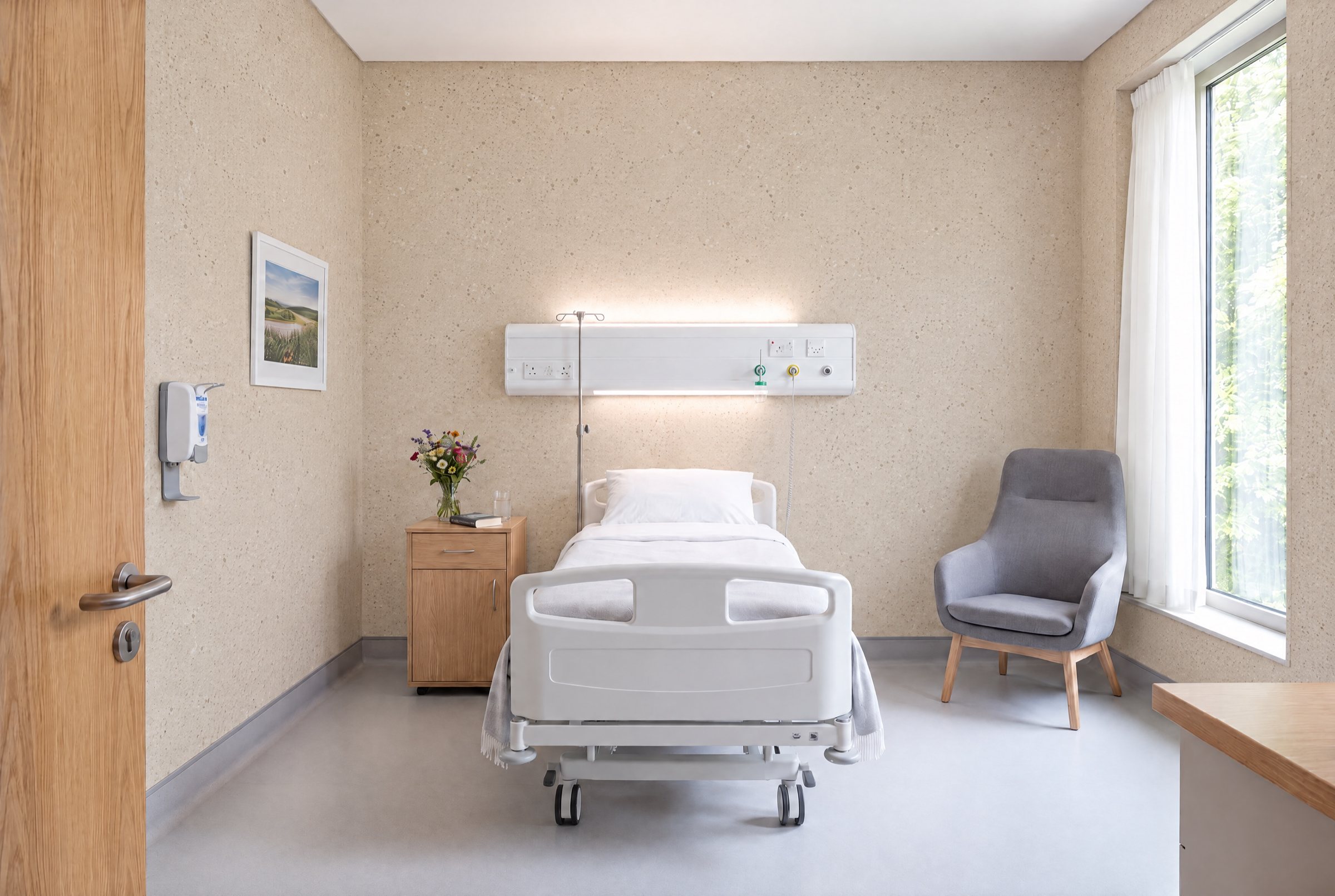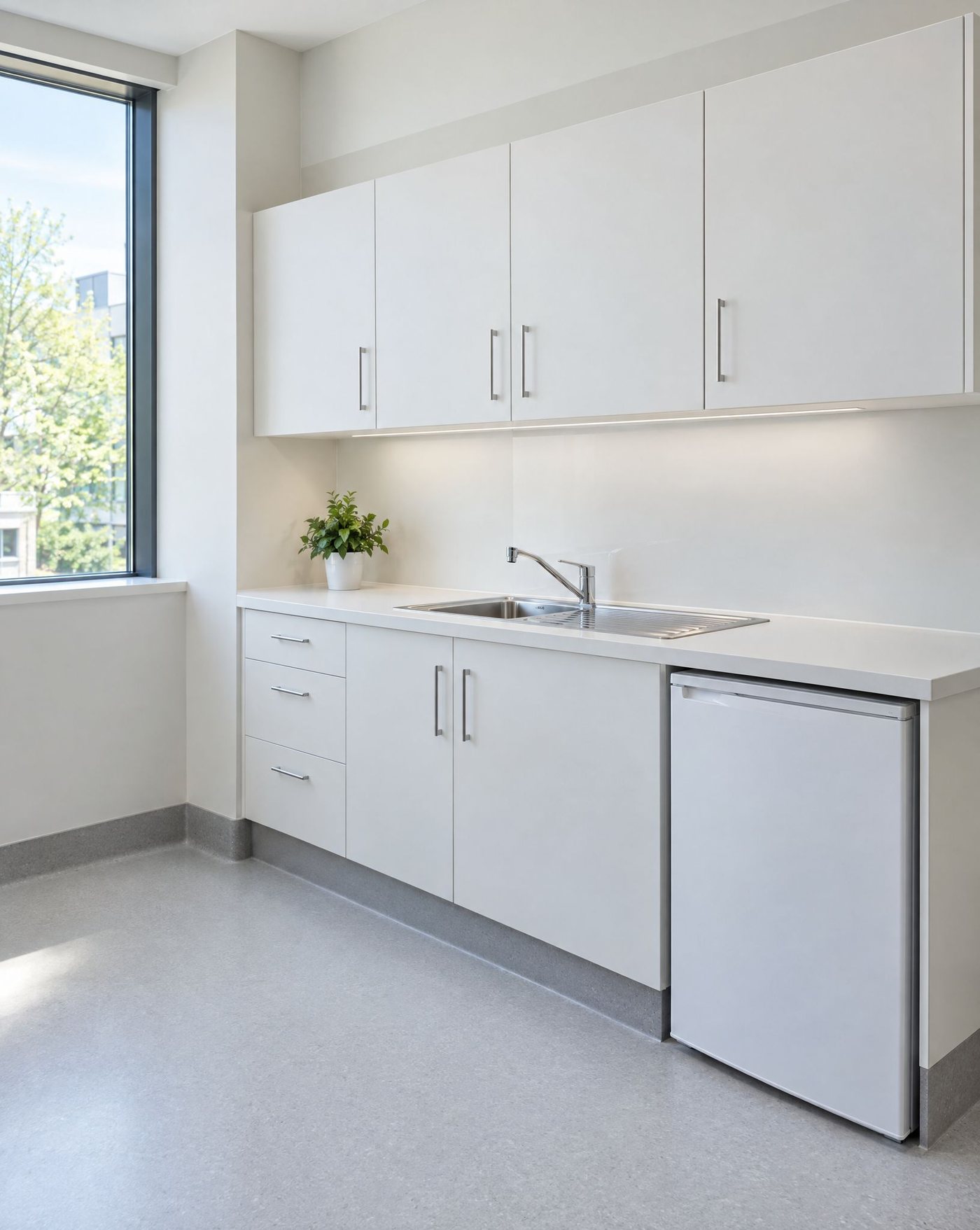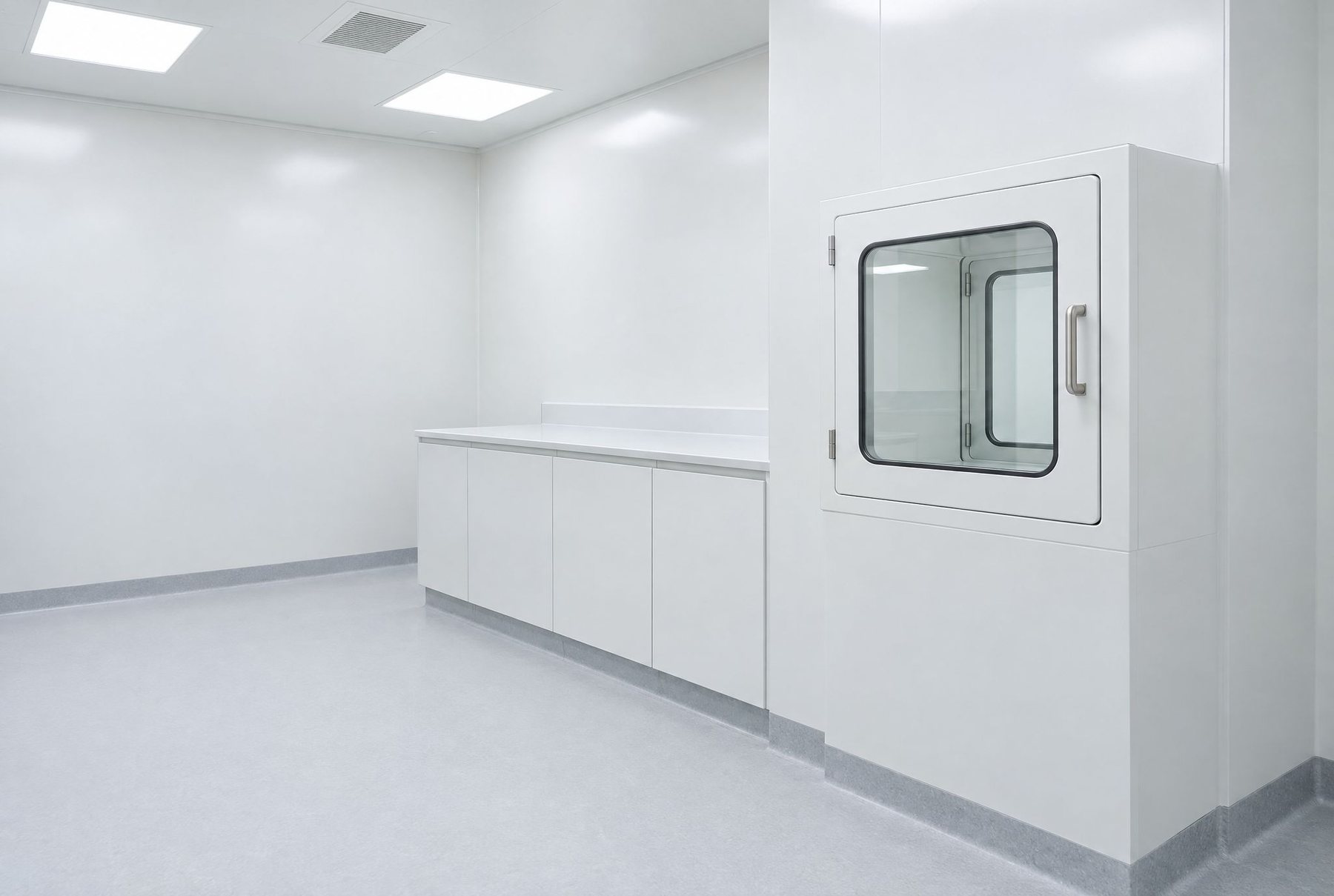
If you don't want stainless steel, the three real options for cleanroom cabinets are welded polypropylene, compact laminate and WCB, a lightweight waterproof board with sealed, welded joints. For most cabinets, gowning benches, step-over benches, garment lockers and transfer hatches, WCB gives you the clean, unbroken surfaces cleanrooms need, while being much lighter, and it machines on the kit a normal joinery workshop already has.
Stainless steel is still the default in a lot of cleanrooms. It is tough and it cleans well. But it is heavy, it shows every fingerprint, it is cold and noisy, and it needs a metal shop to make it. So more fabricators and cleanroom builders are asking what else will do the job.
What does a cleanroom cabinet actually need to do?
Before comparing materials, it helps to be clear on the job. In pharmaceutical work, the rules come from GMP, short for Good Manufacturing Practice. Annex 1 of the EU GMP guide, revised in 2022, covers sterile manufacturing. Three lines in it matter for cabinets.
- Paragraph 4.5: all exposed surfaces should be smooth, impervious and unbroken, so particles and micro-organisms can't build up or shed. Impervious means nothing soaks in.
- Paragraph 4.6: there should be no recesses that are hard to clean, and cupboards should be kept to a minimum. Doors should not create gaps you can't clean.
- Paragraph 4.34: the disinfection process has to be validated on the actual surface material. In plain terms, you test your cleaning regime on what the cabinet is made of.
So a good cleanroom cabinet has a smooth face, nothing that soaks up liquid, no open joints, and it stands up to the cleaning and disinfection it gets every day. Every material below can be judged against that list.
Which materials are used for cleanroom cabinets?
Stainless steel
Stainless steel, usually grade 304 or 316, is the material most cleanroom suppliers list first. It doesn't absorb anything and it stands up to most cleaning agents.
The downsides are practical. It is very heavy. It has to be folded, welded and finished in a metal workshop. It marks easily with fingerprints and smears, which matters in a room where people are judged on how clean things look. And seams and welds need care to keep clean.
Welded polypropylene
Polypropylene is a plastic sheet that is welded together to make units. Its makers sell it on chemical resistance, and it is popular in labs and semiconductor work where strong acids are used.
It is a specialist product. The sheet has to be cut, de-burred and welded by a plastics fabricator, so most joinery and cabinet shops can't make it themselves.
Compact laminate
Compact laminate is a dense, solid sheet made from layers of paper or wood fibre pressed with resin. It is hard wearing and has a tough face.
Two things hold it back in cabinet work. It is heavy and hard on tooling. And cabinets made from it are usually screwed together, with the joints left open. That leaves a gap at every corner where dirt and cleaning fluid can sit, which is the exact thing Annex 1 asks you to avoid.
WCB
WCB is Sealwise's waterproof construction board. It has a coextruded closed cell polymer core with a solid polymer face. Coextruded means the face and core are made together in one sheet, so there is no glued-on layer to peel away.
Cleanroom builders already use WCB for cabinets, transfer hatches and air return panels. The reason isn't that it is waterproof. Every cleanroom material has to be. The reasons are that it is light, easy to work, durable, made using recycled material, and that its joints can be sealed.
How do the options compare?
| What you weigh up | Stainless steel | Welded polypropylene | Compact laminate | WCB |
|---|---|---|---|---|
| Surface | Smooth, non-absorbent, shows fingerprints | Smooth, non-absorbent | Hard, smooth face | Smooth, non-absorbent face with Sealwise Protect antimicrobial built in |
| Joints | Folded and welded | Plastic welded | Usually screwed, joints often left open | Sealed with W14, Sealwise's own chemical, which forms the patented jointing system |
| Weight | Very heavy | Light | Heavy | Light |
| Who can make it | Metal workshop | Plastics fabricator | Joinery shop with hard-wearing tooling | Any joinery or cabinet shop, with standard woodworking tools |
| End of life | Can be recycled as scrap metal | Depends on the maker | Usually landfill | Made using recycled material and can be recycled at the end of its life |
| Guarantee | Varies by maker | Varies by maker | Varies by maker | Lifetime waterproof guarantee on the sheet |
Why do sealed joints matter so much in a cleanroom?
Because the joint is where cabinets fail the clean test. A flat door or side panel is easy to wipe. The trouble starts at the corners, where the side meets the base or the back meets the side.
On a screwed cabinet, that corner is a seam. Cleaning fluid gets wiped into it every day. Dust and residue sit in it where no cloth reaches. Over time it becomes the one place in the unit you can't get clean.
WCB cabinets are joined with W14, Sealwise's own chemical. It forms the patented jointing system that welds the joint between WCB sheets, so the corner is sealed rather than just pushed together. There is no seam left for dust, micro-organisms or cleaning fluid to sit in. That is a much better fit with the "smooth, impervious and unbroken" line in Annex 1 than a screwed joint.
Is WCB easy for a fabricator to work with?
Yes, and this is often the deciding factor. WCB cuts, drills and machines on standard woodworking kit: panel saws, CNC routers and edgebanders. A cabinet shop that already makes kitchens or furniture can make cleanroom units without buying metalworking or plastic-welding equipment.
It is also far lighter than stainless steel or compact laminate. That makes sheets easier to handle in the workshop, units easier to move into a finished cleanroom, and wall-hung units easier to fix. Mid rails and dividing rails can be made in WCB too, so you don't have to bring stainless steel into the unit just for the frame.
Sealwise supplies the sheet. Your team, or your fabrication partner, makes and fits the units. If you are new to WCB, Sealwise can help with design advice and fabrication guides so your team is set up properly before the first unit.
Will WCB stand up to cleanroom cleaning?
WCB is protected against a variety of cleaning agents and disinfectants. It has been used extensively in critical and hygiene environments since 2011.
Every cleanroom runs its own cleaning regime, and Annex 1 asks you to validate your disinfection on the surface material itself. So the sensible step is to ask for WCB samples and run them through your own cleaning and disinfection programme before you specify it. That gives you evidence for your own validation file, not just a supplier's claim.
Which WCB thicknesses are used for cleanroom units?
For cabinet carcasses, 16mm and 18mm WCB are the usual choice. The sheet sizes are:
- 16mm WCB at 2440 x 1220mm
- 18mm WCB at 2440 x 1220mm
- 18mm WCB at 3050 x 1220mm
WCB is also used for cabinet backs.
Frequently asked questions
Is stainless steel required in a GMP cleanroom?
No. Annex 1 sets out what surfaces must do: be smooth, impervious and unbroken, easy to clean and resistant to your cleaning regime. It doesn't name a material. Stainless steel is common, but it isn't the only option.
Is WCB the same as compact laminate?
No. Compact laminate is a dense sheet of resin-pressed paper or wood fibre. WCB is a coextruded closed cell polymer core with a solid polymer face. It is much lighter and its joints can be sealed with W14.
Can WCB be used for transfer hatches and benches?
Yes. Cleanroom builders use WCB for transfer hatches as well as cabinets and air return panels.
Does WCB have a guarantee?
Yes. WCB carries a lifetime waterproof guarantee on the sheet.
Where can I see WCB used in cleanrooms?
See the Cleanrooms page and the waterproof cabinetry page.
Next step
If you build or specify cleanroom units and want a lighter option than stainless steel, ask for WCB samples to run through your own cleaning regime, or send us a drawing. Email info@sealwise.co.uk or call 01934 750084.