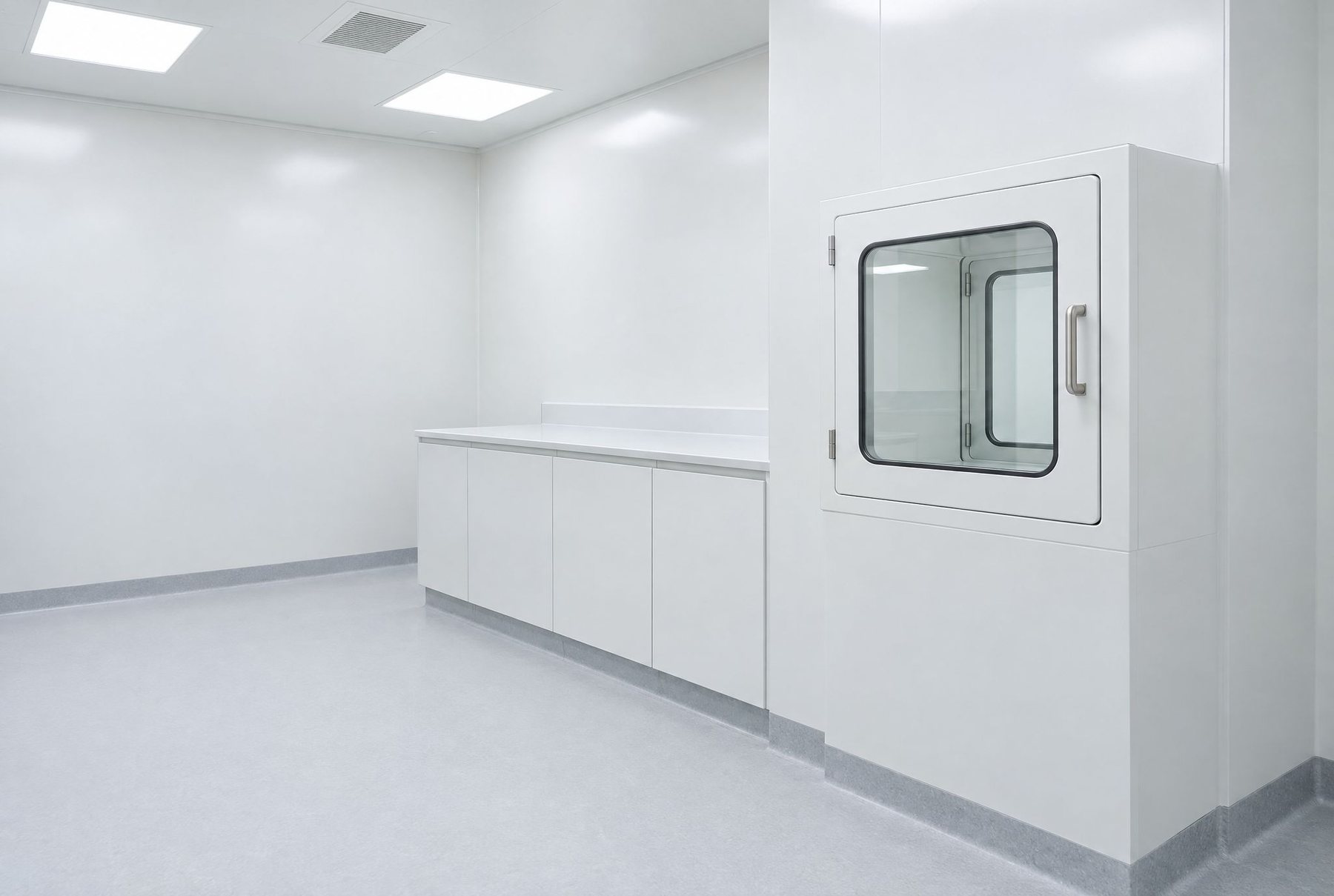
Most healthcare IPS panels are a waterproof plastic face glued onto a wood core, usually plywood, sometimes chipboard. The face keeps water off the front, but once water finds a way past it, the wood behind starts to soak it up, and that's when the panel begins to fail.
IPS stands for integrated plumbing system. It's the run of panels in a washroom that hides the pipes, cisterns and wastes behind toilets and basins. Duct panels are the same idea: panels fixed to a frame to box in a service duct.
This post is for the people who make those panels. It's about the core, the part nobody sees, and what water does to it over the life of a hospital washroom.
What is a healthcare IPS panel actually made of?
Look at the spec sheets for healthcare IPS and you'll see the same build again and again:
- A hygienic polymer face. Usually a couple of millimetres thick, smooth and wipe-clean.
- A wood core. Most often plywood between 12mm and 18mm, labelled WBP or marine grade. In dry areas, moisture resistant chipboard or MDF is common too.
- A thin backing sheet. This is the balancer, a layer on the back that stops the panel bowing.
Plywood is thin layers of wood glued together with the grain crossing. WBP means "weather and boil proof", which describes the glue, not the wood. Marine ply is plywood made to a stricter standard for boats.
So the panel looks like plastic from the front. Inside, it's still timber.
Is marine ply waterproof?
No. This is the bit that catches people out.
The glue in marine and WBP ply is made to survive water. The wood between the glue lines isn't. Plywood makers say this openly on their own sites. Marine ply copes with damp, but the wood still takes on water, swells and can rot if it stays wet.
Water moves fastest into plywood through a raw cut edge. That's where the end grain of every layer is open, a bit like the end of a bundle of straws. The British Standard for marine plywood even warns that water getting in at the edge can make the core swell unevenly and break up.
Chipboard and MDF are worse. They're made of wood chips or fibres pressed together with resin. When they get wet, they swell and don't shrink back.
Where does water get into an IPS panel?
A hospital washroom gets wet every day. Floors are mopped, walls are wiped down with disinfectant, and pipes and valves sit just behind the panels. Water has four main ways in.
1. Through a damaged face
The polymer face is waterproof on its own. But a trolley knock, a crack round a fitting or a corner where the glue has let go gives water a path to the core. Once the wood behind gets wet, it swells and pushes the face away. This is called delamination: the layers coming apart.
2. Through a cut edge
Every IPS run has holes cut for pan connectors, flush plates, taps and wastes. Many are cut on site. If that raw edge isn't sealed perfectly, and kept sealed for years, the wood core is open to water. The bottom edge of the panel sits at mop height, so it's tested every day.
3. Through a screw hole
Hinges, catches, grab rails and access panels are all screwed in. Each screw hole goes straight through the face into the core. With a wood core, water that gets into a screw hole can soak along the grain and soften the wood around the screw. Over time the fixing loosens.
4. Through a joint
Panels meet at joints, and joints are usually sealed with silicone or a strip. Seals age and crack. When they do, water runs down the gap and reaches the edge of the core on both panels.
There's also water from behind. A weeping valve or a slow drip from a cistern can soak the back of a panel for weeks before anyone opens the duct.
What happens to a wood core when it gets wet?
It rarely fails all at once. It goes in stages.
First the wood takes on water and swells, usually at an edge or around a hole. Then the face starts to lift or bubble. The panel may stay damp inside, out of sight, which is the kind of place where mould can grow. Fixings loosen. In the end the panel has to come out.
In a hospital, that isn't a quick swap. The washroom closes, the water gets isolated, sanitaryware comes off and a fitter has to make and fit a new panel. If the cause was a joint or a cut edge, the next panel can go the same way.
What's different about a waterproof polymer core?
A polymer core takes the wood out of the panel. If there's no wood in the core, there's nothing to swell, soak up water or rot.
Our FS sheet is made for this job. FS is extruded, which means it's pushed out through a shaped tool as one continuous sheet. It has a closed cell polymer core. Closed cell means it's made of tiny sealed cells that don't join up, so water has no path through the sheet. It's a rigid polymer sheet made using recycled material, with a smooth surface for laminating, and IPS systems and shower panelling are two of its main uses.
Go back to the four ways in:
- A damaged face lets water reach a core that doesn't take it up, so there's nothing pushing the face off.
- A cut edge is just as waterproof as the face, because the sheet is the same all the way through.
- A screw hole doesn't wick water into the rest of the panel. FS works with all fixtures and fittings. For the best results around water, we recommend stainless steel fittings where you can.
- A failed joint lets water reach the panel edge, and the edge doesn't swell.
And if something leaks inside the duct, you fix the leak and dry it off. The FS panel isn't affected and stays as it was.
FS carries a lifetime waterproof guarantee.
When should you use WCB instead?
Use FS when you want a waterproof core under a face you choose. Look at our WCB sheet when the panel or the units around it need to be fully hygienic without adding a face.
WCB has a coextruded closed cell polymer core. Coextruded means the core and the solid outer surface are made together as one sheet, so there's no face to lift off. WCB can be joined with W14, our welded joint system, so the joint is sealed with no gap for dirt or water. WCB also carries a lifetime waterproof guarantee.
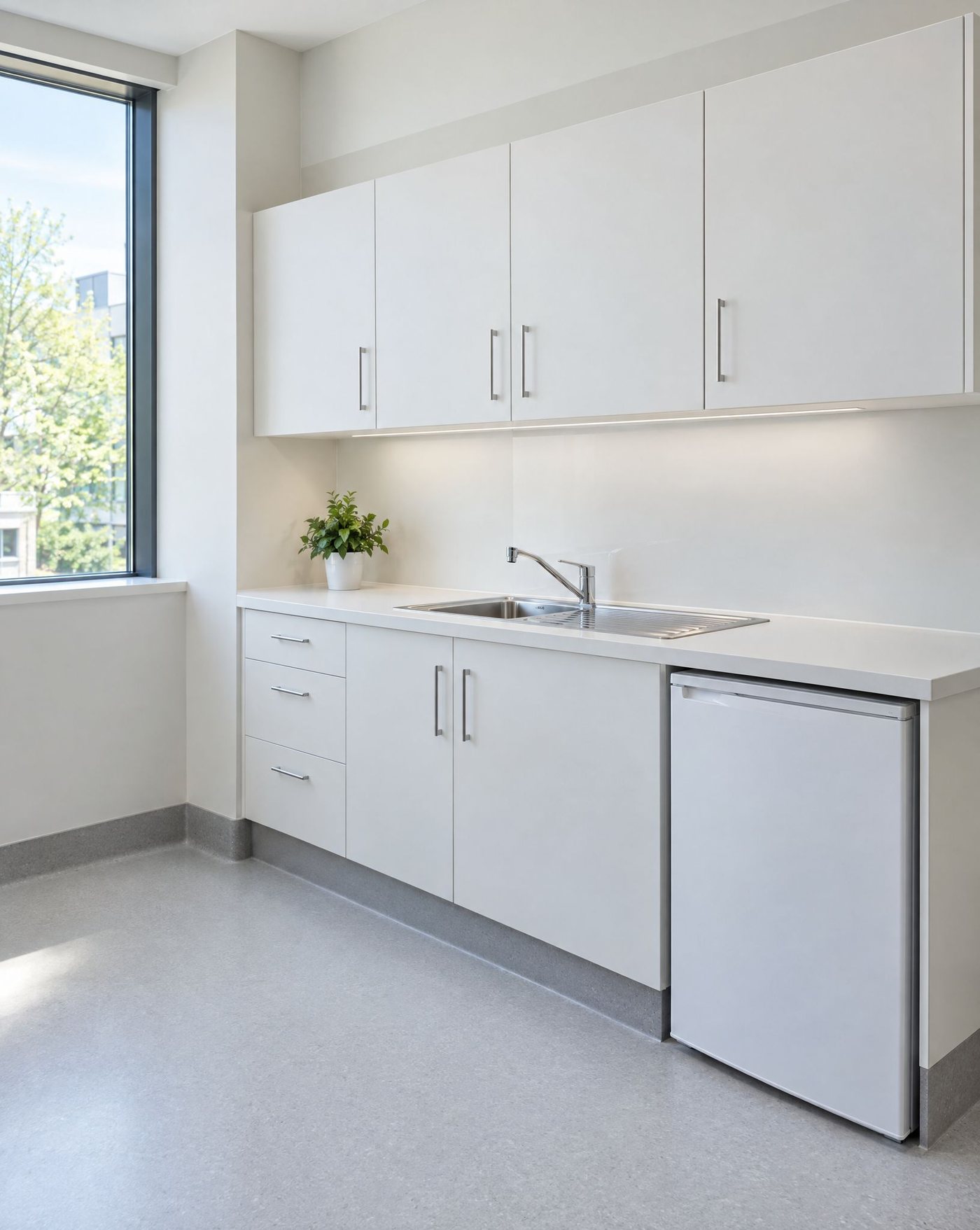
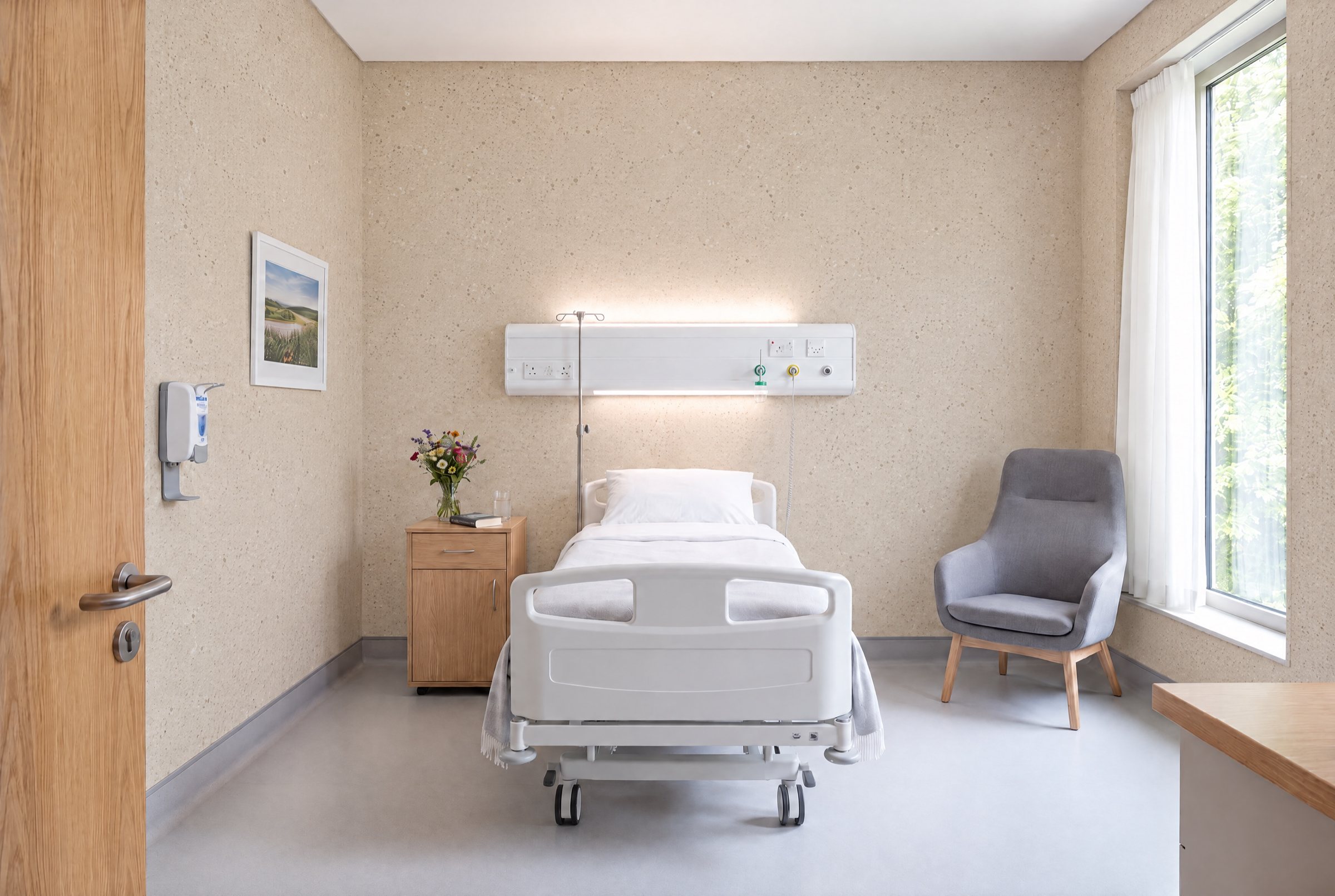
Sealwise sheets are already used in hospitals and healthcare sites for IPS systems, ward furniture and bedside lockers.
Why does the core change the cost of a panel over its life?
The board is a small part of what a washroom costs. The big costs come later: a closed washroom, a plumber, a fitter and a new panel. With a wood core, each wet edge, joint and screw hole is a small risk that adds up over the years.
A waterproof core takes most of those risks away. That's what we mean by lower lifetime cost. It's also why our sheets have been used extensively in critical and hygiene environments since 2011.
If you're still choosing between boards for different washroom zones, read our guide to choosing a board for a wet washroom.
Quick questions about IPS panel cores
What core do most healthcare IPS panels use?
Most use a polymer face on a plywood core, often labelled WBP or marine ply. Some use moisture resistant chipboard or MDF in drier areas.
Is a polymer face on plywood waterproof?
The face is. The panel as a whole is only as waterproof as its weakest edge, joint or screw hole, because the plywood behind it can still take on water.
Is "moisture resistant" the same as waterproof?
No. Moisture resistant boards slow water down. A waterproof core doesn't take on water at all.
Can FS be laminated with a hygienic face?
Yes. FS is used as a core, with a smooth surface made for laminating. Cladding is available from all suppliers. We don't push one brand, so FS works for any panel maker.
What sizes does FS come in?
FS is stocked in the UK in three sizes: 18mm at 2440 x 1220mm, 18mm at 3050 x 1220mm, and 15mm at 3050 x 1220mm.
Can the panels be recycled?
Yes. FS is fully recyclable. We collect offcuts free from approved fabrication partners, and take back end-of-life sheet in the UK.
Want to test a waterproof core on your next IPS job?
If you make IPS or duct panels and want samples or technical help, email info@sealwise.co.uk.